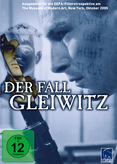
Unmittelbar nach dem Mauerbau, am 24. August 1961, kam 'Der Fall Gleiwitz' von Gerhard Klein, Wolfgang Kohlhaase und Günther Rücker heraus. Ein Film über die Möglichkeiten und Techniken von Provokationen, der Manipulierung von Tatsachen und Meinungen, ein Film, der absolut im Trend der Zeit mit ihrer permanent sich steigenden Spannung zwischen den beiden Supermächten und ihrem jeweiligen Lager lag und mit dieser Intention auch erdacht wurde. Der Überfall auf den Rundfunksender Gleiwitz nahe der polnischen Grenze, der den Grund für den Krieg gegen Polen lieferte, wird hier minutiös rekonstruiert. Leider war die öffentliche Anteilnahme an dem Film kurz nach dem Mauerbau nicht sehr groß. Erzählweise und Form des Films verstörten nicht nur die Offiziellen, sondern auch das Massenpublikum. Der Film versuchte das Prinzip des Faschismus, die Massen mit Perfektion zu beherrschen und sie durch Organisation, Ordnung und Gewaltandrohungen für Krieg und Welteroberung gefügig zu machen, filmisch zum Ausdruck zu bringen und in der Bildstruktur erlebbar werden zu lassen. Die im Film dargestellten Massenveranstaltungen der Nazis riefen durch eine auf Symmetrie und Betonung der Geraden ausgerichtete Bildsprache eine distanzierte Haltung bei den Zuschauern hervor. Manche Kritiker sahen darin eine Verherrlichung der Organisationsfähigkeiten der Nazis, was ein Missverständnis des Films bedeutet. Bis heute gehört 'Der Fall Gleiwitz' zu den wesentlichen Arbeiten der DEFA und behauptet seinen Platz in einer antifaschistischen Weltfilmkunst.
Weiterlesen »
Immediately after the Wall was built, on 24 August 1961, 'The Gliwice Case' by Gerhard Klein, Wolfgang Kohlhaase and Günther Rücker was published. A film about the possibilities and techniques of provocation, the manipulation of facts and opinions, a film that was absolutely in line with the trend of the time with its constantly increasing tension between the two superpowers and their respective camps, and was also conceived with this intention. The attack on the radio station Gliwice near the Polish border, which provided the reason for the war against Poland, is meticulously reconstructed here. Unfortunately, the public interest in the film was not very great shortly after the Wall was built. The narrative style and form of the film disturbed not only the officials, but also the mass audience. The film attempted to master the principle of fascism with perfection and to make them docile for war and world conquest through organization, order and threats of violence, to express it on film and to make it tangible in the visual structure. The mass Nazi events depicted in the film evoked a distanced attitude among the audience through a visual language aimed at symmetry and emphasis on straight lines. Some critics saw this as a glorification of the Nazis' organizational skills, which is a misunderstanding of the film. To this day, 'The Gliwice Case' is one of the most important works of the DEFA and asserts its place in an anti-fascist world film art.
More »