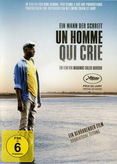
Der Tschad, heute: Der 60 Jahre alte Adam Ousmane (Youssouf Djaoro) ist schwer enttäuscht, als er seinen Job als Poolboy in einem Hotel aufgeben muss, während sein Sohn Abdel (Diouc Koma) seinen Posten dort behalten darf. Adam verkauft seinen Filius und Konkurrenten an die Armee, die ihn kidnappt, um seinen angestammten Job, der alles für ihn bedeutet, wieder zu bekommen und gleichzeitig seinen Obolus an den Militärchef des Viertels zu zahlen. Doch die Schuld lastet schwer auf ihm...
'Ein Mann, der schreit' (2010) erzählt eine berührende Vater-Sohn-Beziehung aus dem Tschad. Mahamat-Saleh Haroun (siehe 'Daratt' und 'Bye Bye Africa'), kein Unbekannter im internationalen Festivalzirkus, legt mit 'Un homme qui crie', so der französische Originaltitel, erneut ein Drama vor, das sich mit der prekären Situation seines Heimatlandes auseinandersetzt. Dabei macht er den nationalen Konflikt erneut anhand eines privaten Schicksals deutlich und verzichtet auf explizite Kriegsszenen. Einfühlsam und ruhig gedreht überzeugte er Publikum und Jurys weltweit, u.a. auf dem Festival von Cannes, wo er im offiziellen Wettbewerb mit dem Preis der Jury ausgezeichnet wurde. Ein Film wie eine Reise, ein Meisterwerk afrikanischer Filmkunst und ein authentischer Einblick in das Afrika von heute.
Weiterlesen »
Chad, today: 60-year-old Adam Ousmane (Youssouf Djaoro) is deeply disappointed when he has to give up his job as a pool boy in a hotel, while his son Abdel (Diouc Koma) is allowed to keep his job there. Adam sells his Filius and competitors to the army, which kidnaps him in order to get back his traditional job, which means everything to him, and at the same time pay his dues to the military chief of the neighborhood. But the guilt weighs heavily on him...
'A Man Who Screams' (2010) tells the story of a touching father-son relationship from Chad. Mahamat-Saleh Haroun (see 'Daratt' and 'Bye Bye Africa'), no stranger to the international festival circus, presents 'Un homme qui crie', the original French title, another drama that deals with the precarious situation of his home country. In doing so, he once again makes the national conflict clear on the basis of a private fate and dispenses with explicit war scenes. Sensitively and calmly shot, it convinced audiences and juries worldwide, including at the Cannes Festival, where it was awarded the Jury Prize in the official competition. A film like a journey, a masterpiece of African cinematography and an authentic insight into Africa today.
More »