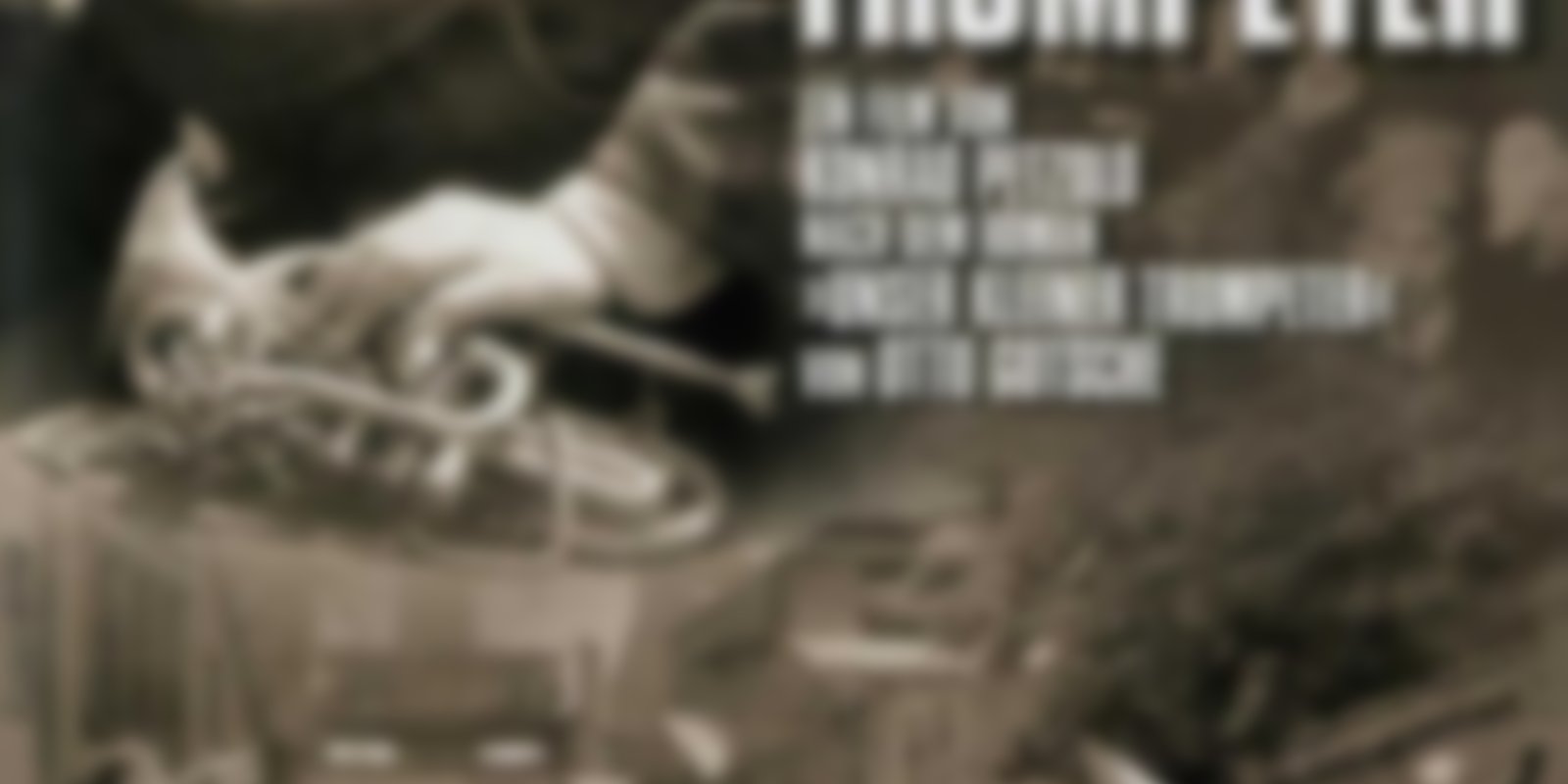
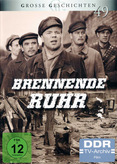
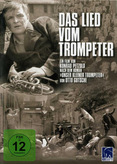
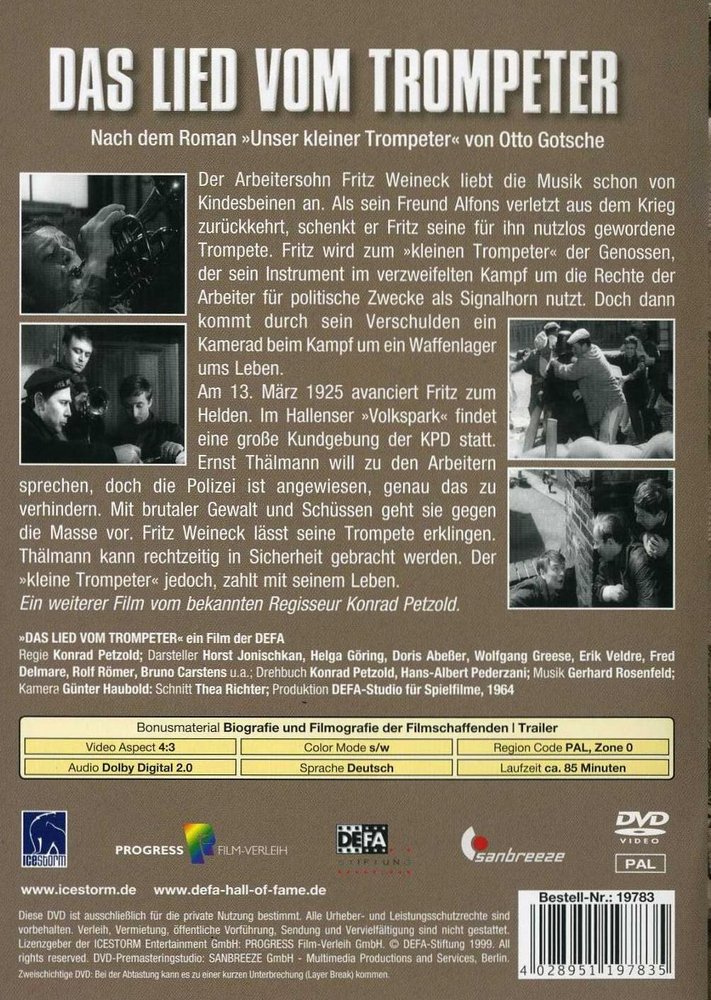
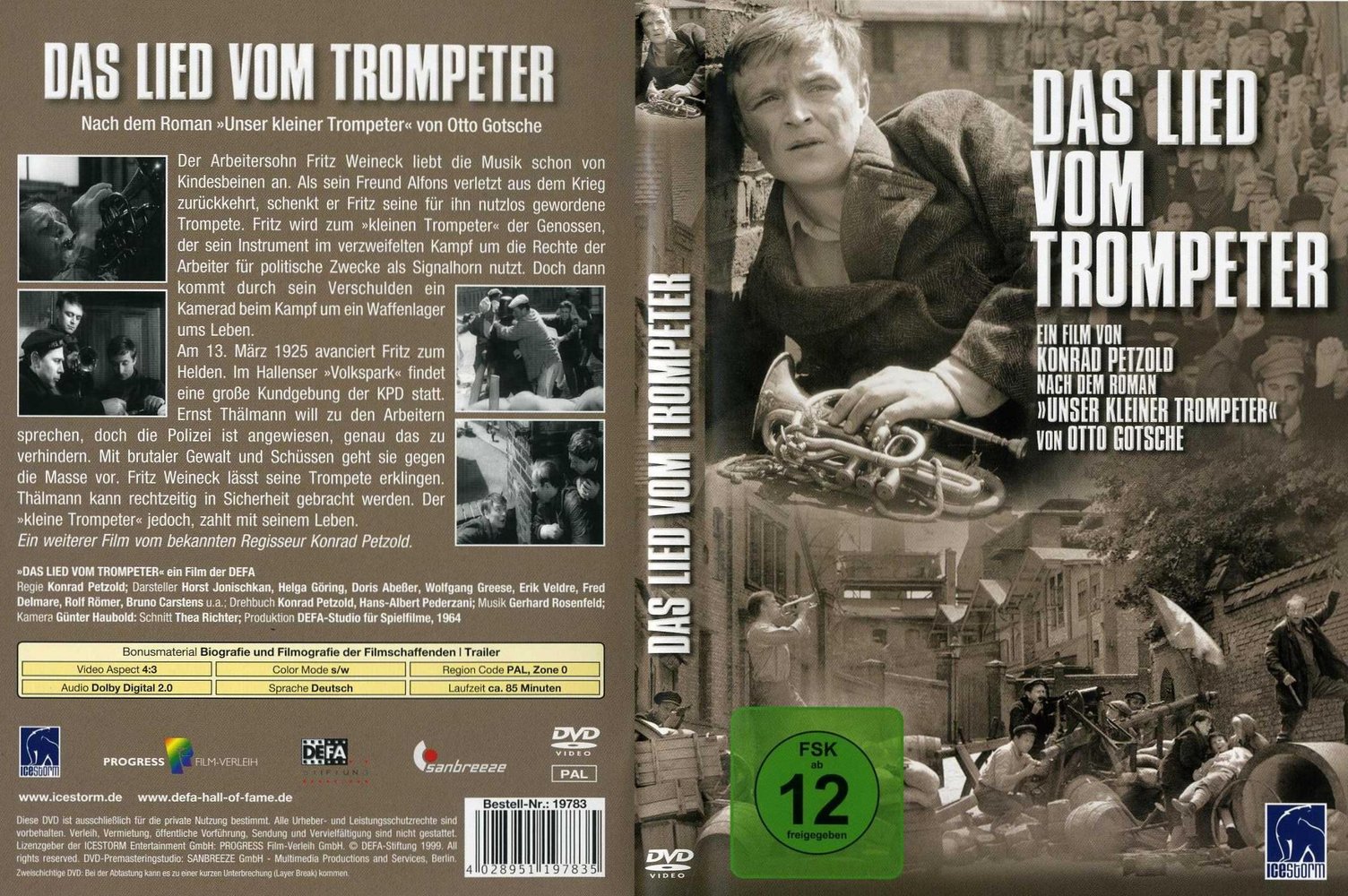
Fritz Weineck (Horst Jonischkan), ein Arbeitersohn aus 'Halle', liebt die Musik schon von Kindesbeinen an. Anfangs übte er Mundharmonika und spielte bald der 'besseren Gesellschaft' zum Tanz. Als sein Freund Alfons Wieland (Rolf Römer) als Krüppel aus dem Krieg zurückkehrt, schenkt er Fritz seine für ihn nutzlos gewordene Trompete. Fritz wird zum 'kleinen Trompeter' der Genossen, der sein Instrument für politische Zwecke als Signalhorn nutzt, im verzweifelten Kampf um die Rechte der Arbeiter nach dem Sturz des Kaiserreichs. Doch dann kommt durch sein Verschulden ein Kamerad beim Kampf um ein Waffenlager ums Leben...
Am 13. März 1925 avanciert Fritz zum Helden. Im Hallenser 'Volkspark' findet eine große Kundgebung der 'KPD' statt. Ernst Thälmann will zu den Arbeitern sprechen, doch die Polizei ist angewiesen, genau das zu verhindern. Mit brutaler Gewalt und Schüssen geht sie gegen die Masse vor. Fritz Weineck lässt ein Warnsignal, seine Trompete, erklingen. So kann Thälmann rechtzeitig in Sicherheit gebracht werden. Der 'kleine Trompeter' jedoch, einer der zuverlässigsten Kämpfer der Hallenser Arbeiterschaft, zahlt mit seinem Leben, davon erzählt Regisseur Konrad Petzold in der DEFA-Produktion 'Das Lied vom Trompeter' (1964).
Weiterlesen »
Fritz Weineck (Horst Jonischkan), a working-class son from 'Halle', has loved music since childhood. At first he practiced the harmonica and soon played the 'better society' for dancing. When his friend Alfons Wieland (Rolf Römer) returns from the war as a cripple, he gives Fritz his trumpet, which has become useless to him. Fritz becomes the 'little trumpeter' of the comrades, who uses his instrument for political purposes as a signal horn in the desperate struggle for the rights of the workers after the fall of the Empire. But then, through his fault, a comrade is killed in the fight for a weapons cache...
On March 13, 1925, Fritz became a hero. A large rally of the 'KPD' takes place in Halle's 'Volkspark'. Ernst Thälmann wants to speak to the workers, but the police are instructed to prevent exactly that. With brutal violence and shots, she proceeds against the masses. Fritz Weineck sounds a warning signal, his trumpet. In this way, Thälmann can be brought to safety in time. However, the 'little trumpeter', one of the most reliable fighters of the Halle workforce, pays with his life, as director Konrad Petzold tells in the DEFA production 'Das Lied vom Trompeter' (1964).
More »