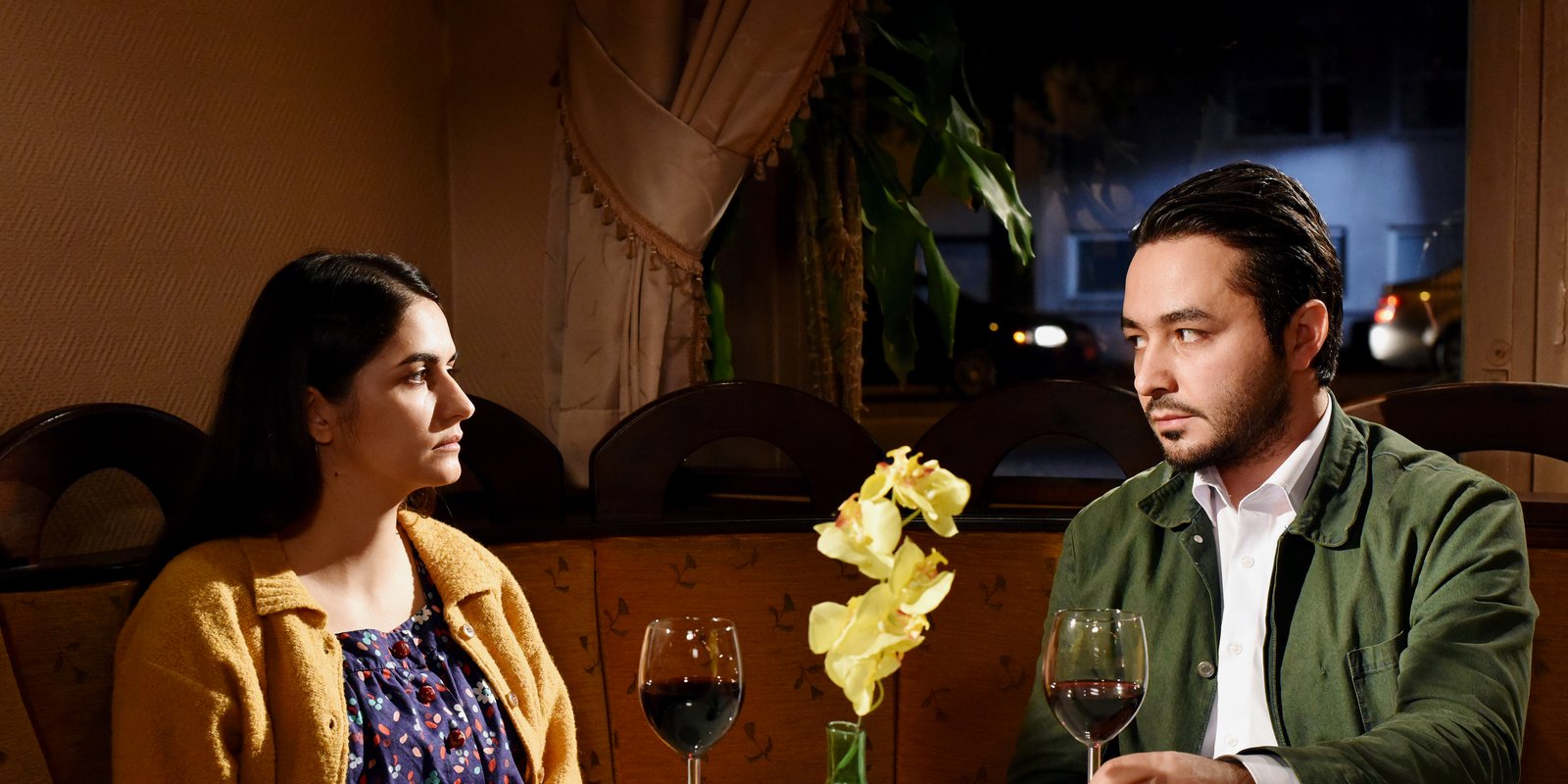
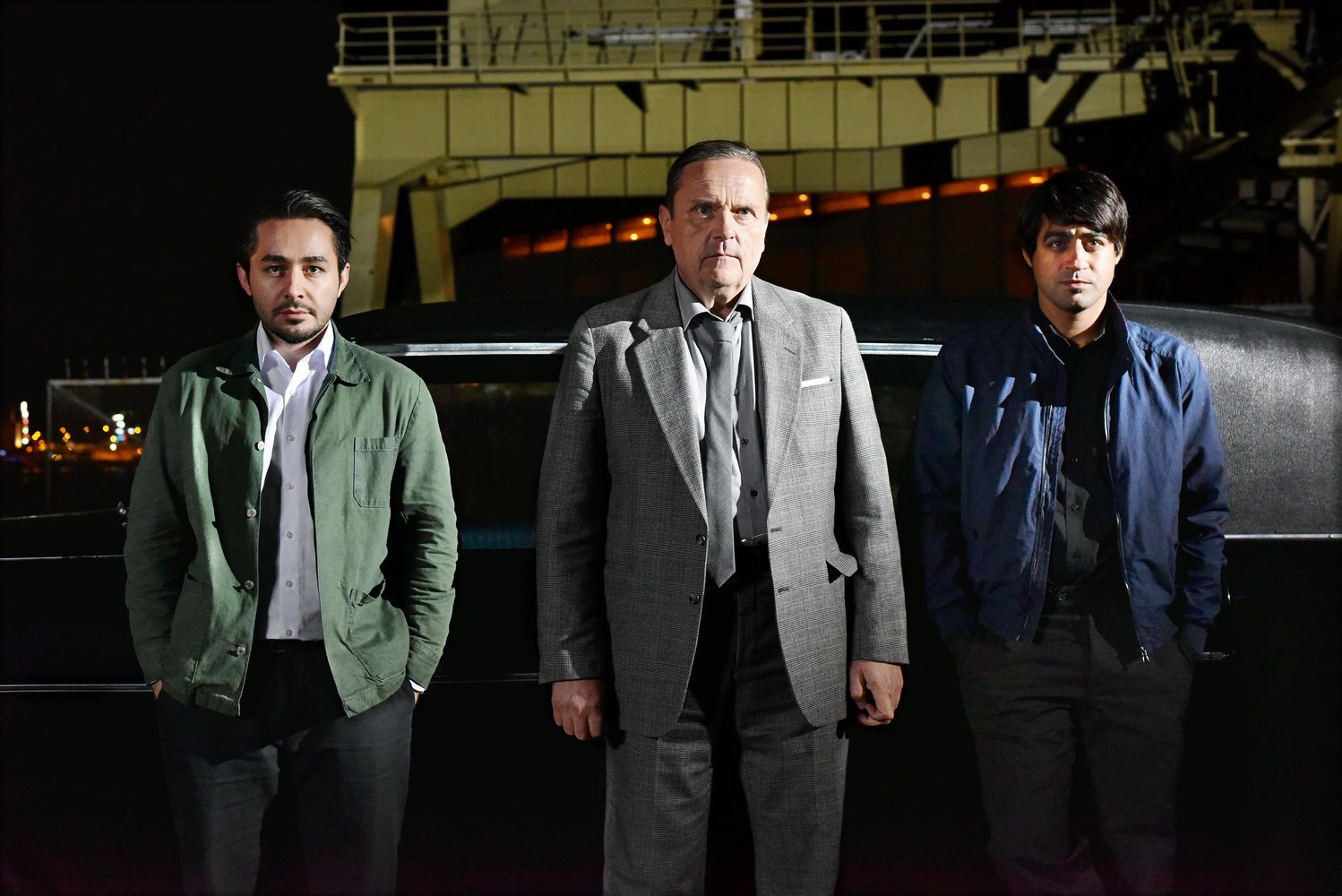
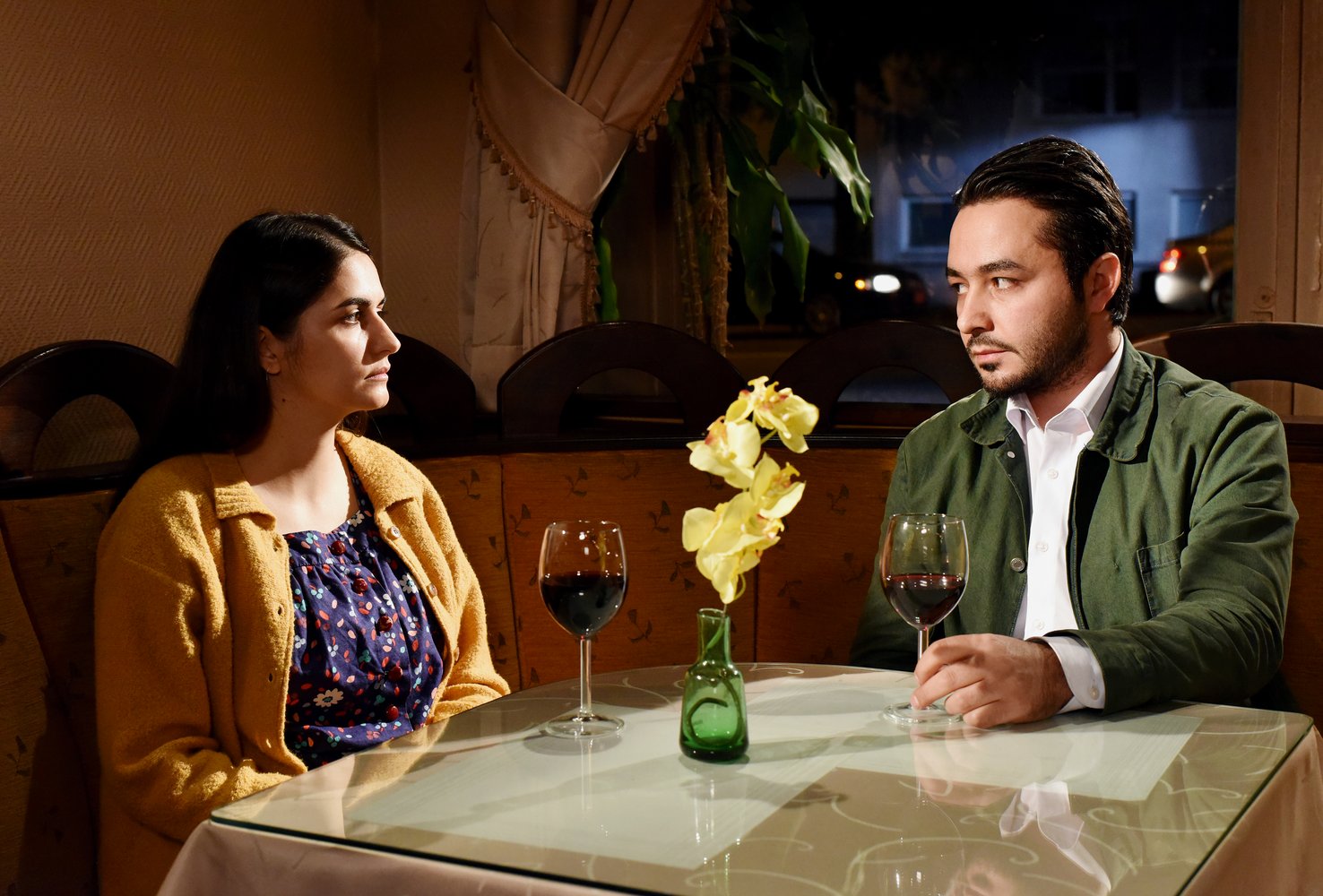
Khaled (Sherwan Haji), ein junger Syrer, gelangt als blinder Passagier nach Helsinki. Dort will er Asyl beantragen, ohne große Erwartungen an seine Zukunft. Wikström (Sakari Kuosmanen) ist ein fliegender Händler für Männerhemden und Krawatten. In der Mitte des Lebens angekommen, verlässt er seine Frau, gibt seinen Job auf und profiliert sich kurzfristig als Poker-Spieler. Von dem wenigen Geld, das er dabei gewinnt, kauft er ein herunter-gewirtschaftetes Restaurant in einer abgelegenen Gasse von Helsinki. Als die finnischen Behörden entscheiden, Khaled in die Ruinen von Aleppo zurückzuschicken, beschließt er, illegal im Land zu bleiben. Wikström findet ihn schlafend im Innenhof vor seinem Restaurant. Vielleicht sieht er etwas von sich selbst in diesem ramponierten, angeschlagenen Mann. Jedenfalls stellt er Khaled als Putzkraft und Tellerwäscher an. Für einen Moment zeigt uns das Leben seine sonnigere Seite, aber schon bald greift das Schicksal ein. Der Ausgang des Films bleibt offen, er führt entweder in ein respektables Leben oder auf den Friedhof. Für in die Enge getriebene Menschen bietet beides Vorzüge...
'Die andere Seite der Hoffnung' erzählt davon, dass jeder Melancholie ein fast rebellischer Zug der Hoffnung innewohnt. Und zeigt das Leben als Wechselspiel von ständiger Sehnsucht und schwankender Hoffnung, von fast märchenhafter Menschlichkeit und kaltem Realismus. Aki Kaurismäkis Filme sind bekannt für ihren lakonischen, skurrilen und minimalistischen Stil. Seine Helden waren immer die kleinen Leute: Außenseiter, Arbeiter und Arbeitslose - die Verlierer der Gesellschaft. Seit 'Le Havre' (2011) hat Kaurismäki den Kosmos seiner filmischen Underdogs um eine globale Komponente erweitert, um diejenigen, die auf der Flucht sind und jetzt in der sozialen Hierarchie ganz unten stehen. Für 'Die andere Seite der Hoffnung' (2017) wurde Aki Kaurismäki auf den 67. Internationalen Filmfestspielen in Berlin mit dem 'Silbernen Bär' für die beste Regie ausgezeichnet.
Weiterlesen »
Khaled (Sherwan Haji), a young Syrian, arrives in Helsinki as a stowaway. There he wants to apply for asylum, without great expectations of his future. Wikström (Sakari Kuosmanen) is a traveling merchant of men's shirts and ties. Arriving in the middle of life, he leaves his wife, gives up his job and makes a name for himself as a poker player for a short time. With the little money he wins, he buys a run-down restaurant in a remote alley in Helsinki. When the Finnish authorities decide to send Khaled back to the ruins of Aleppo, he decides to stay in the country illegally. Wikström finds him sleeping in the courtyard in front of his restaurant. Maybe he sees something of himself in this battered, battered man. In any case, he hires Khaled as a cleaner and dishwasher. For a moment, life shows us its sunnier side, but soon fate intervenes. The outcome of the film remains open, it leads either to a respectable life or to the cemetery. For cornered people, both offer advantages...
'The Other Side of Hope' tells of the fact that every melancholy has an almost rebellious streak of hope. And shows life as an interplay of constant longing and wavering hope, of almost fairytale humanity and cold realism. Aki Kaurismäki's films are known for their laconic, whimsical and minimalist style. His heroes were always the little people: outsiders, workers and the unemployed - the losers of society. Since 'Le Havre' (2011), Kaurismäki has added a global component to the cosmos of his cinematic underdogs, to include those who are on the run and are now at the bottom of the social hierarchy. For 'The Other Side of Hope' (2017), Aki Kaurismäki was awarded the 'Silver Bear' for Best Director at the 67th Berlin International Film Festival.
More »