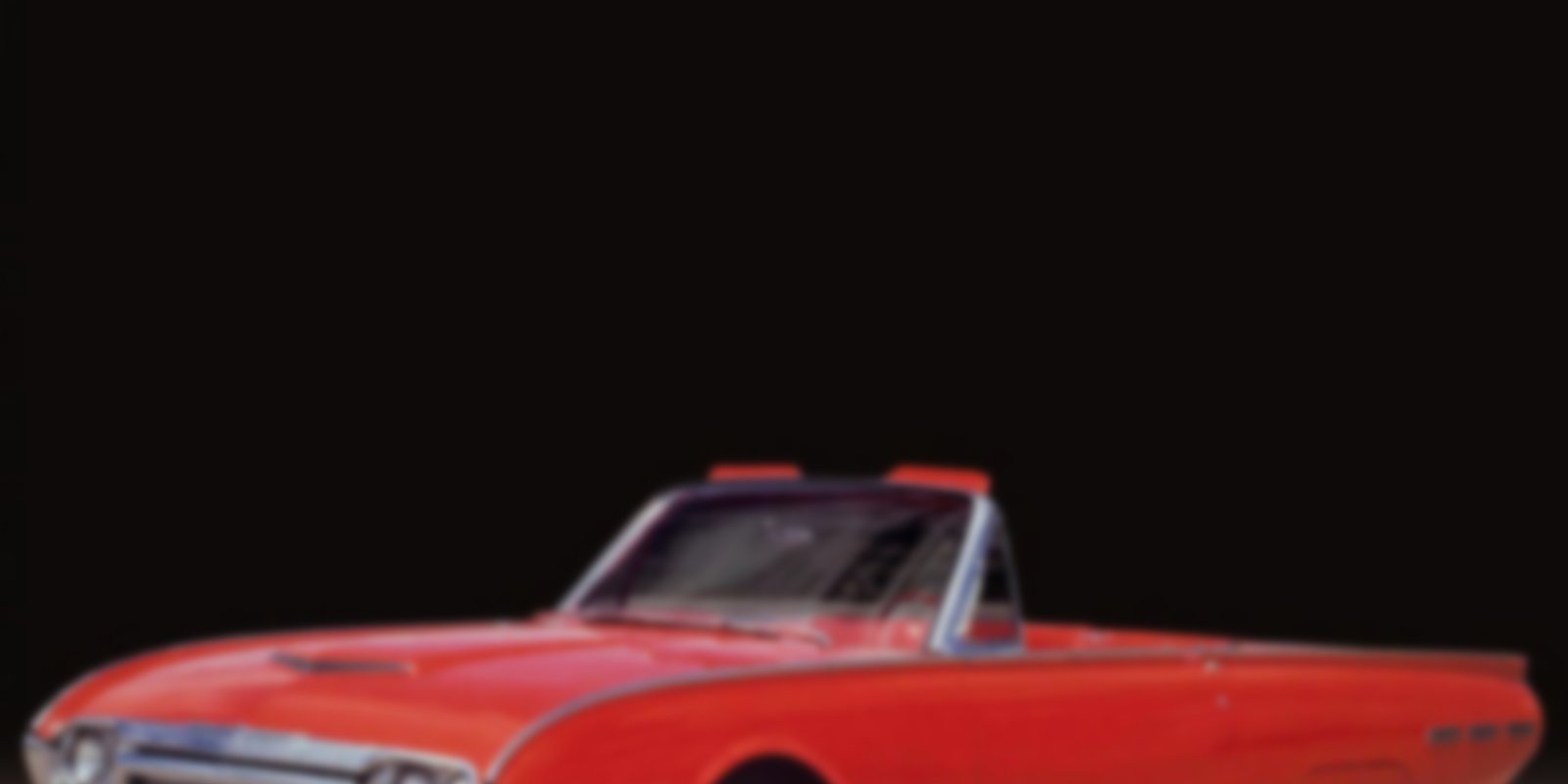
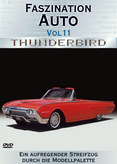
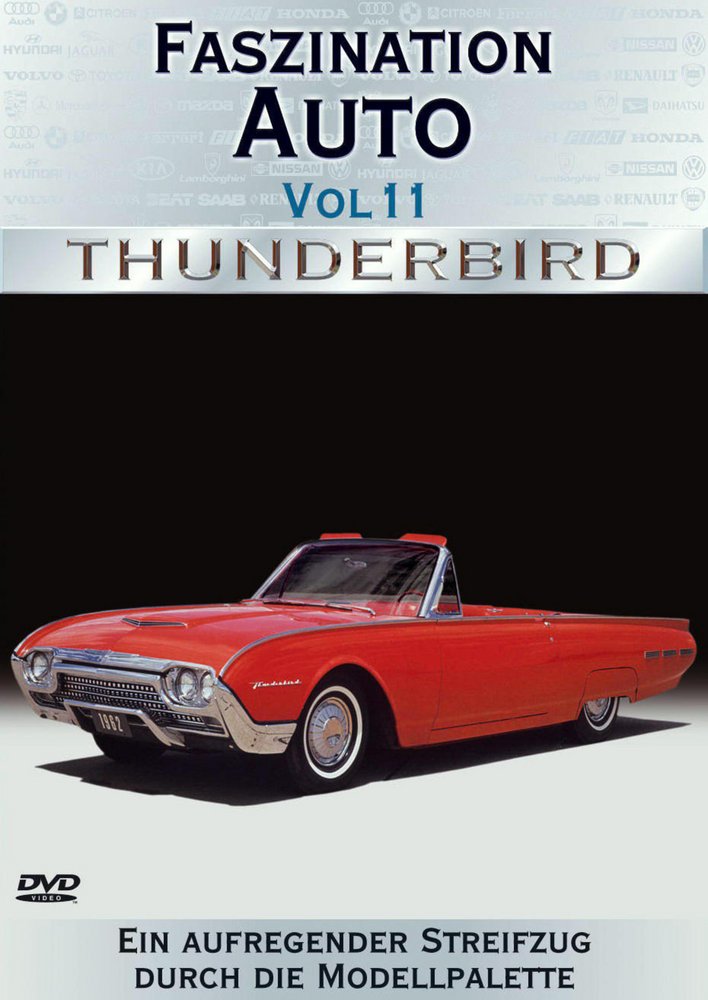
Der Ford Thunderbird gilt als einer der Klassiker des amerikanischen Automobilbaus schlechthin. Er symbolisierte in den USA die 1950er und 60er Jahre. Der Name 'Thunderbird' steht für einen der am längsten in der Automobilgeschichte (und Industriegeschichte) durchgängig verwendeten Warennamen; nur Corvette, Mustang, Camaro, Firebird, Eldorado, Carrera und einige Ziffern-Buchstaben-Kombinationen (z.B. 911) können eine ähnliche Tradition vorweisen. Am Anfang war der Thunderbird (1955-1957) noch ein reiner sportlicher Zweisitzer und wurde als Konkurrenz zur Chevrolet Corvette platziert. Für den Thunderbird sprachen damals der V8-Motor, welchen die Corvette erst später bekam. Charakteristisch waren die großen Scheinwerfer. Die späteren Modelle (1958-1969) hatten die kantigere Form der mittleren 60er. Die Motorleistung wuchs von ca. 150 PS auf bis zu über 300 PS und die Fahrzeuge waren als Viersitzer deutlich größer als das Urmodell. Schließlich gab es den Thunderbird bis 1971 auch als Viertürer, wobei die hinteren Türen gegenläufig öffneten ('suicide doors'), so wie beim Lincoln Continental der Jahre 1961 bis 1970. Spätestens zu diesem Zeitpunkt waren die Fahrzeuge offiziell maximal als Sechssitzer zu haben. Es gab aber auch erstaunliche Kombinationen, so ein Fünfsitzer, der vorne drei und hinten nur zwei Sitze hatte. Zumindest für die Fahrzeuge 1967-1971 gilt, dass sie im Fahrverhalten und Verbrauch besser als die Konkurrenz von GM und Chrysler abschnitten. Im James-Bond-Film 'Diamantenfieber' ist ein 1971 Landau Coupé zu bewundern; der arme James wird in den Kofferraum des Wagens geworfen und verschleppt. 1972 wurde dann der größte Thunderbird aller Zeiten gebaut mit einem 460-cui-Motor. In den 80er und 90er Jahren verlor der Wagen allerdings immer mehr an Gesicht und Bedeutung. Größe und Leistung blieben im Verhältnis zu anderen Fahrzeugen zwar weiterhin gut, aber wiesen nicht mehr den Reisenvorsprung auf. Die Motorisierung in den 80ern wies R4-Turbomotoren, V6 und V8 auf. Zum Ende der 80er und die 90er hindurch gab es V6, V8 und V6-Kompressormotoren. Mit der neuesten Auflage, ab Modelljahr 2002, wurde eine Reminiszenz an die Urversion dieses Autos geschaffen, das zu den legendärsten Automobilen der Welt zählt.
Weiterlesen »
The Ford Thunderbird is considered one of the classics of American automotive engineering par excellence. It symbolized the 1950s and 60s in the USA. The name 'Thunderbird' stands for one of the longest used product names in automotive (and industrial history); only the Corvette, Mustang, Camaro, Firebird, Eldorado, Carrera and some number-letter combinations (e.g. 911) can boast a similar tradition. In the beginning, the Thunderbird (1955-1957) was still a purely sporty two-seater and was placed as a competitor to the Chevrolet Corvette. At that time, the Thunderbird was supported by the V8 engine, which the Corvette only got later. The large headlights were characteristic. The later models (1958-1969) had the more angular shape of the mid-60s. The engine output grew from about 150 hp to over 300 hp and the vehicles were significantly larger than the original model as four-seaters. After all, the Thunderbird was also available as a four-door model until 1971, with the rear doors opening in opposite directions ('suicide doors'), as in the Lincoln Continental of the years 1961 to 1970. But there were also amazing combinations, such as a five-seater that had three seats in the front and only two in the back. At least for the vehicles 1967-1971, it is true that they performed better than the competition from GM and Chrysler in terms of handling and consumption. In the James Bond film 'Diamond Fever', a 1971 Landau Coupé can be admired; poor James is thrown into the trunk of the car and abducted. In 1972, the largest Thunderbird of all time was built with a 460 cui engine. In the 80s and 90s, however, the car lost more and more of its face and importance. Size and performance remained good in relation to other vehicles, but no longer had the travel advantage. The engine in the 80s had R4 turbocharged engines, V6 and V8. At the end of the 80s and throughout the 90s, there were V6, V8 and V6 supercharged engines. With the latest edition, from model year 2002, a reminiscence of the original version of this car, which is one of the most legendary automobiles in the world, has been created.
Automatically translated with AI
More »