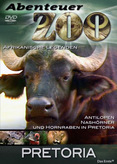
Löwe, Nashorn, Elefant, Büffel und Leopard könnten sich darüber streiten, wem von ihnen der höchste Rang gebühre. Viele Geschichten afrikanischer Völker erzählen von ihrem Mut, ihrer Kraft, ihrer Klugheit. Doch nicht nur der König der Savanne ist heute in der immer weniger freien Natur ein Herrscher ohne Land. In Reservaten, Nationalparks und in zoologischen Gärten können die Afrikaner die Big Five noch erleben. Im Zoo von Pretoria nutzen täglich mehrere Tausend Besucher aller Couleur das Angebot, den Tieren der Heimat nahe zu sein. Das Steinböckchen ist ein typischer Bewohner von Busch und Steppe. Mit dem Gebirgstier aus den Alpen hat der afrikanische "Steenbok" nichts gemein. Burische Siedler gaben der ihnen unbekannten Antilope einfach einen vertrauten Namen. Auch die große Elenantilope kam so zu ihrer Bezeichnung - in Anlehnung an den nordischen Elch. Zu nahezu jeder afrikanischen Landschaft gehören mehrere Vertreter der artenreichen Antilopen-Familie. Unterschiedlich in Lebensweise, Größe, Farbe, Form des Gehörns. Stattliche Herden auf riesigen Anlagen im Zoo und in seinen beiden Außenstationen vermitteln den Besuchern das Gefühl, Nyalas, Kudus, Impalas, Tsessebes oder den seltenen Oryx inmitten der Wildnis zu begegnen. Das Nashorn wäre beinahe nur noch Legende. Seit Beginn des Jahrhunderts bemüht sich Südafrika um den Schutz der Kolosse mit dem in Asien und Arabien so begehrten Nasenhorn. Heute gibt es vom Südlichen Breitmaulnashorn schon wieder eine beachtliche Anzahl. Das Überleben der anspruchslosen Kolosse scheint gesichert. In der Außenstation Lichtenburg nennen etliche Breitmaulnashörner ein Stück Savanne ihr Eigen. In Pretoria teilen sie sich ein Gehege mit verschiedenen Antilopen und den Vögeln, die alle Jahre wieder im August von Europa in den warmen Süden kommen. Im letzten Jahr bauten hier zwei Weißstörche erstmals ein Nest. Kinder haben sie den Zooleuten in Afrika bisher noch nicht gebracht. Die Hornraben sollen die Buschmänner im südlichen Afrika einst zu besonderen Jagdmethoden inspiriert haben. Die zänkischen schwarzen Tiere sind die einzigen Nashornvögel Afrikas, die auf dem Boden leben und nur zum Schlafen auf die Bäume fliegen. Sie haben hier ein Séparée mit Ausblick. Ihnen liegt nicht nur der ganze Tierpark, sondern gleich die halbe Stadt zu Füßen. Am Abend ist die Skyline von Pretoria besonders imposant.
Weiterlesen »
Lions, rhinoceros, elephants, buffaloes and leopards could argue about which of them deserves the highest rank. Many stories of African peoples tell of their courage, their strength, their wisdom. But it is not only the king of the savannah who is a ruler without a country in the less and less free nature today. In reserves, national parks and zoological gardens, Africans can still experience the Big Five. At Pretoria Zoo, several thousand visitors of all stripes take advantage of the opportunity to be close to the animals of their homeland every day. The ibex is a typical inhabitant of bush and steppe. The African "Steenbok" has nothing in common with the mountain animal from the Alps. Boer settlers simply gave the antelope, which was unknown to them, a familiar name. The large eland antelope also got its name in this way - in reference to the Nordic moose. Almost every African landscape includes several representatives of the species-rich antelope family. Different in lifestyle, size, color, shape of the horns. Stately herds on huge grounds in the zoo and in its two outstations give visitors the feeling of encountering nyalas, kudus, impalas, tsessebes or the rare oryx in the middle of the wild. The rhinoceros would almost be nothing more than a legend. Since the beginning of the century, South Africa has been trying to protect the colossi with the nose horn, which is so coveted in Asia and Arabia. Today there are already a considerable number of the southern white rhinoceros. The survival of the undemanding colossi seems assured. In the Lichtenburg outstation, several white rhinos call a piece of savannah their own. In Pretoria, they share an enclosure with various antelopes and the birds that come from Europe to the warm south every year in August. Last year, two white storks built a nest here for the first time. They have not yet brought children to the zoo people in Africa. The hornbills are said to have once inspired the Bushmen in southern Africa to special hunting methods. The quarrelsome black animals are the only hornbills in Africa that live on the ground and only fly to the trees to sleep. You have a private room with a view. Not only the entire zoo, but half the city is at their feet. In the evening, the skyline of Pretoria is particularly impressive.
More »