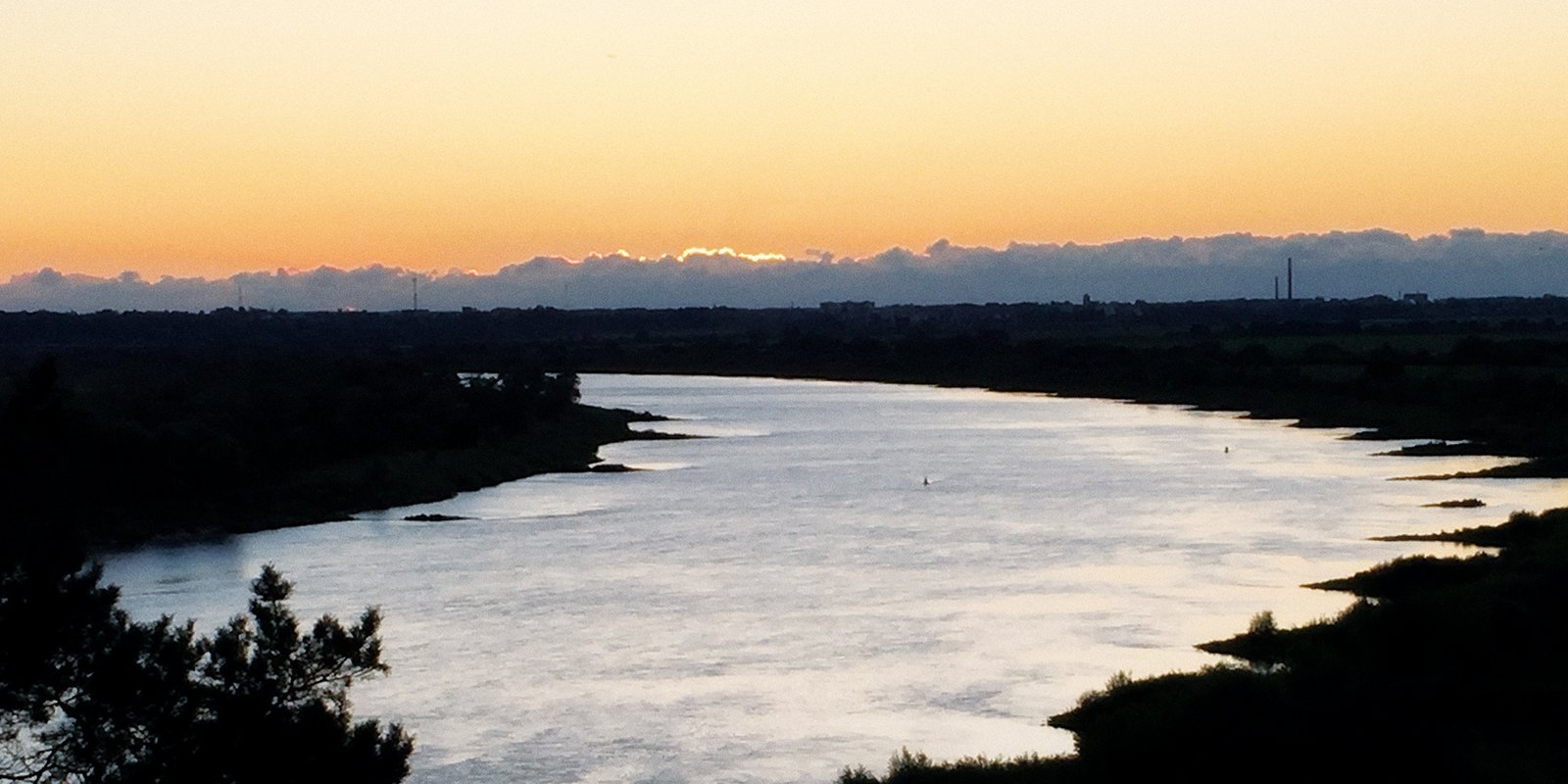
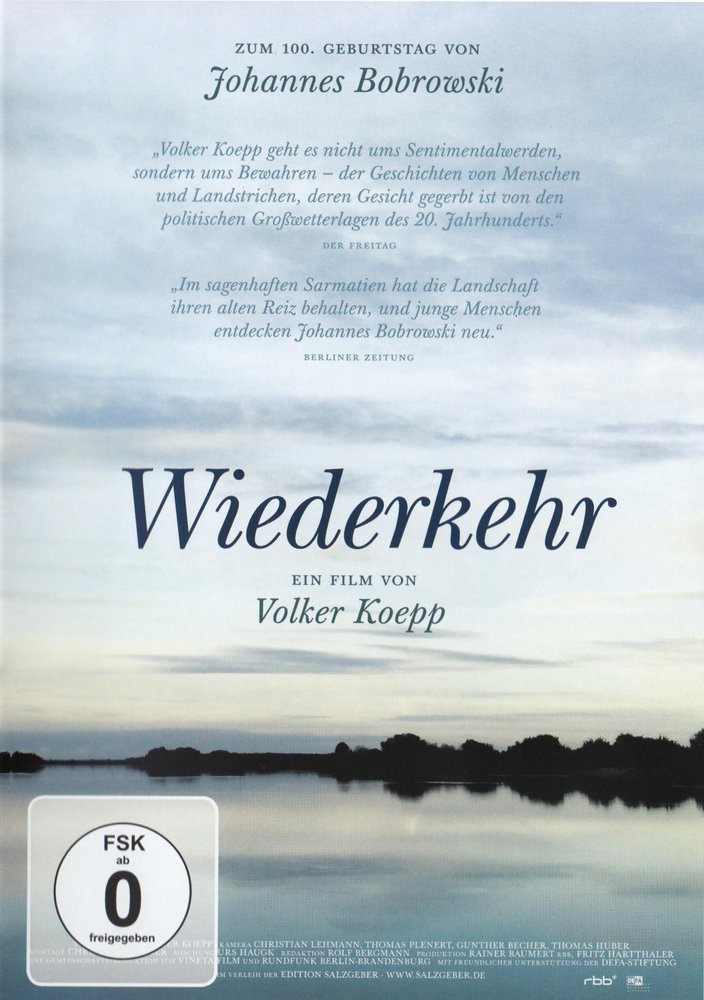
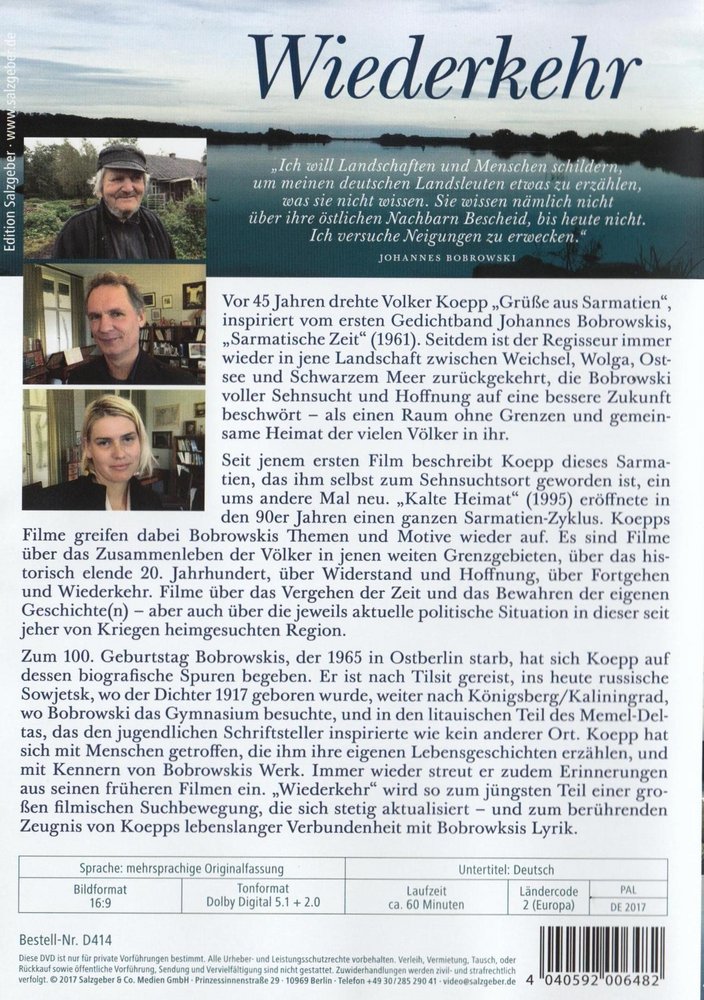
Vor 45 Jahren drehte Volker Koepp 'Grüße aus Sarmatien' (1973), inspiriert vom ersten Gedichtband Johannes Bobrowskis, 'Sarmatische Zeit' (1961). Seitdem ist der Regisseur immer wieder in jene Landschaft zwischen Weichsel, Wolga, Ostsee und Schwarzem Meer zurückgekehrt, die Bobrowski voller Sehnsucht beschwört. Seine Heimat, das Memelland, verwandelt Bobrowski in seiner Lyrik zu einem utopischen Raum ohne Grenzen, zu einer gemeinsamen Heimat der vielen Völker in ihr. Seit jenem ersten Film findet Koepp immer wieder neue Bilder für dieses Sarmatien, das dem Regisseur selbst zum Sehnsuchtsort geworden ist. 'Kalte Heimat' (1995) eröffnete in den neunziger Jahren einen ganzen Sarmatien-Zyklus. Koepps Filme beschreiben die Gegenwart und das Leben an den großen östlichen Strömen und greifen dabei Bobrowskis Themen und Motive wieder auf. Es sind Filme über das Zusammenleben der Völker in jenen weiten Grenzgebieten, über das historisch elende 20. Jahrhundert, über Widerstand und Hoffnung, über Fortgehen und Wiederkommen. Filme über das Vergehen der Zeit und das Bewahren der eigenen Geschichte(n) - aber auch über die jeweils aktuelle politische Situation in dieser seit jeher von Kriegen heimgesuchten Region. Zum 100. Geburtstag Bobrowskis, der 1965 in Ostberlin starb, hat sich Koepp auf dessen biografische Spuren begeben. Er ist nach Tilsit gereist, ins heute russische Sowjetsk, wo der Dichter 1917 geboren wurde, weiter nach Königsberg/Kaliningrad, wo Bobrowski das Gymnasium besuchte, und in den litauischen Teil des Memel-Deltas, das den jugendlichen Schriftsteller inspirierte wie kein anderer Ort auf der Welt. Koepp hat sich mit Einheimischen getroffenen, die ihm ihre eigenen Heimatgeschichten erzählen, und mit Kennern von Bobrowskis Werk. Immer wieder streut er aber auch Erinnerungen aus seinen früheren Filmen ein. 'Wiederkehr' wird so zum jüngsten Teil einer großen filmischen Suchbewegung, die sich immer wieder aktualisiert - und zum berührenden Zeugnis einer lebenslangen Verbundenheit zweier Künstler.
Weiterlesen »