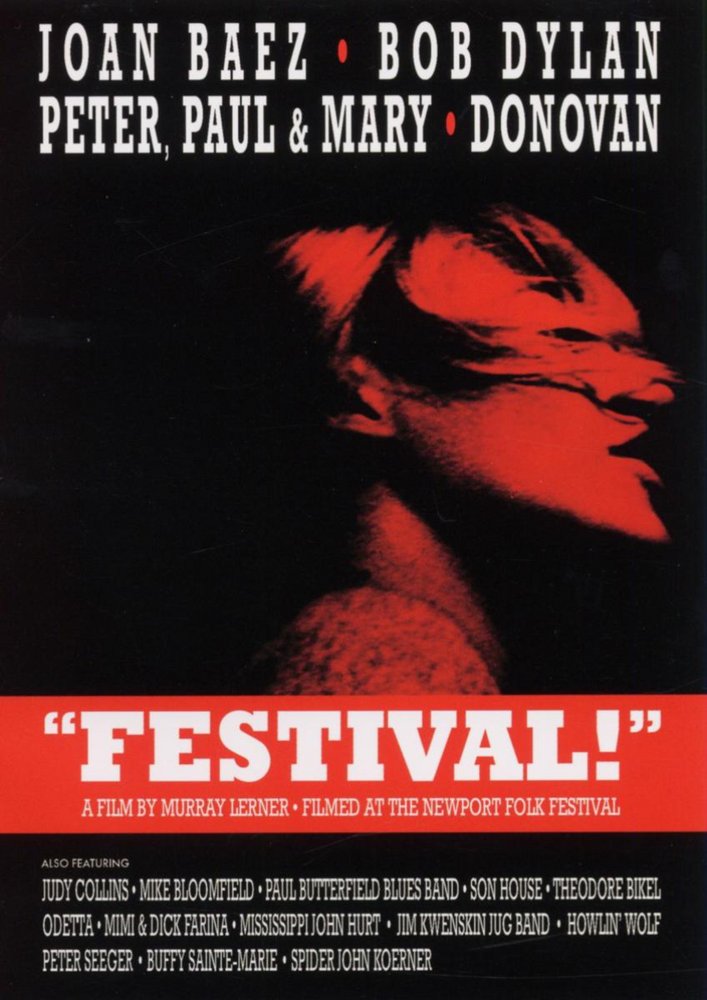
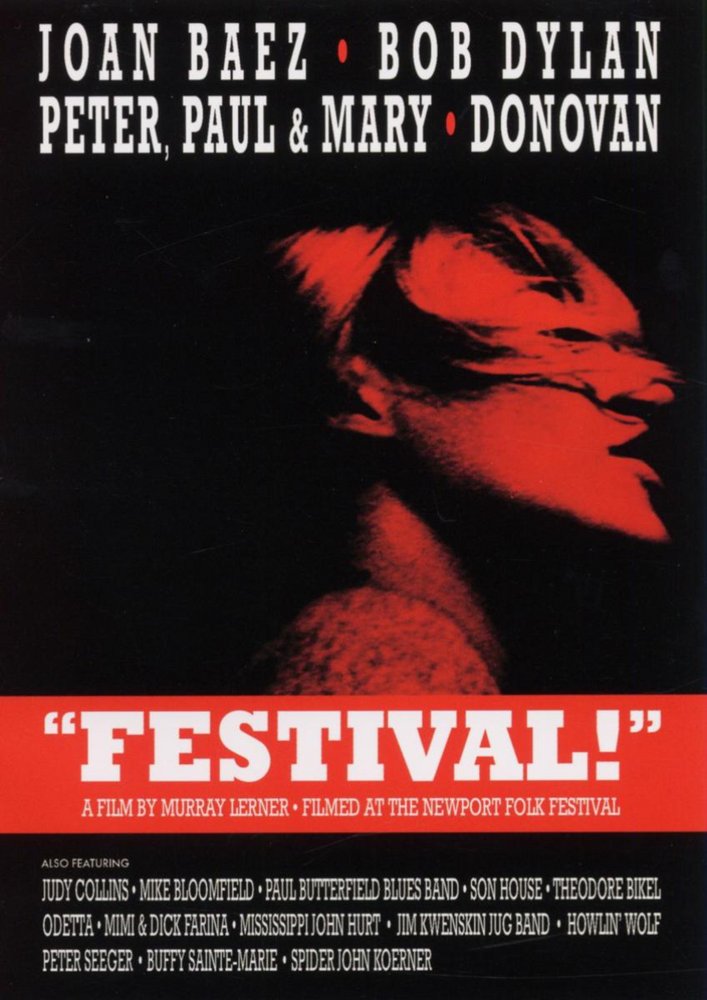
Murray Lerner’s film 'Festival' is a cinematic synthesis of four Newport-Folk-Festivals in which the art of folk music is pictured in transition during its moist crucial years. The range is from Bob Dylan doing 'Tambourine Man' and Joan Baez doing 'Farewell Angelina' to country artists like Johnny Cash doing 'I Walk the Line' to the 'Georgia Sea Island Singers'. The range is also from the high-priced professionals like 'Peter, Paul and Mary' to the authentic folk dignity of living legends such as 'Son House and Mississippi' John Hurt. Joan Baez, Donovan, Judy Collins are all on view, as are Pete Seeger, the 'Ed Young Fife' and 'Drum Corps' and numerous others that give a feeling of community with the whole American present and continuity with the American past. Indeed, the long-haired Newport audiences pictured sleeping on beaches and on the grounds and in sports cars and battered station wagons, plunking banjoes and guitars, and swapping tunes between formal concerts, and talking for Lerner about folk music, seem not a rupture with the American past but an expression of a carrying forward of an American idealism and social concern.
Weiterlesen »
Murray Lerner’s film 'Festival' is a cinematic synthesis of four Newport-Folk-Festivals in which the art of folk music is pictured in transition during its moist crucial years. The range is from Bob Dylan doing 'Tambourine Man' and Joan Baez doing 'Farewell Angelina' to country artists like Johnny Cash doing 'I Walk the Line' to the 'Georgia Sea Island Singers'. The range is also from the high-priced professionals like 'Peter, Paul and Mary' to the authentic folk dignity of living legends such as 'Son House and Mississippi' John Hurt. Joan Baez, Donovan, Judy Collins are all on view, as are Pete Seeger, the 'Ed Young Fife' and 'Drum Corps' and numerous others that give a feeling of community with the whole American present and continuity with the American past. Indeed, the long-haired Newport audiences pictured sleeping on beaches and on the grounds and in sports cars and battered station wagons, plunking banjoes and guitars, and swapping tunes between formal concerts, and talking for Lerner about folk music, seem not a rupture with the American past but an expression of a carrying forward of an American idealism and social concern.
More »