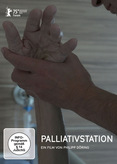
Wie begegnen Menschen dem eigenen Tod? Und wie kann man schwerstkranken Patienten helfen, der verbleibenden Zeit so viel Lebensqualität wie möglich zu geben? Der Kino-Dokumentarfilm 'Palliativstation' (2025) begleitet den Alltag auf der Palliativstation des Franziskus-Krankenhaus Berlin über mehrere Wochen, um diesen Fragen nachzugehen. Nicht um jeden Preis dem Leben mehr Zeit, sondern der verbleibenden Zeit mehr Leben zu geben - das ist ein Grundsatz der Palliativmedizin. Die Lebensqualität des Patienten und sein subjektives Wohlbefinden stehen im Vordergrund. An die Stelle der kurativen Therapie tritt die Symptomkontrolle und die Behandlung von psychologischen, sozialen und spirituellen Problemen. In langen Einstellungen beobachtet dieser Film von Philipp Döring die Gespräche und Begegnungen der Ärzte, Pfleger und Therapeuten mit den Patienten und ihren Angehörigen. Die Behandler sehen sich dabei mit komplexen medizinischen, ethischen, psychologischen und juristischen Fragen konfrontiert, auf die es letzten Endes immer nur individuelle Antworten geben kann, denn jeder Mensch muss seinen eigenen Umgang mit dem Sterben finden.
Weiterlesen »
How do people face their own death? And how can seriously ill patients be helped to give the remaining time as much quality of life as possible? The cinema documentary 'Palliativward' (2025) accompanies everyday life in the palliative care ward of the Franziskus Hospital Berlin over several weeks to explore these questions. Giving life more time at any price, but more life to the remaining time - that is a principle of palliative medicine. The patient's quality of life and his subjective well-being are in the foreground. Curative therapy is replaced by symptom control and the treatment of psychological, social and spiritual problems. In long takes, this film by Philipp Döring observes the conversations and encounters of doctors, nurses and therapists with patients and their relatives. The practitioners are confronted with complex medical, ethical, psychological and legal questions, to which ultimately only individual answers can be given, because every person has to find his or her own way of dealing with dying.
Automatically translated with AI