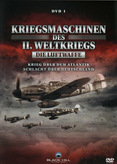
Sechs Jahre Krieg - auch in der Luft: 26 Tage nach Kriegsausbruch fanden die ersten Angriffe der Luftwaffe auf Frachtschiffe statt. Im Jahr 1940, in der Nacht auf den 12. Mai, startete Großbritannien seinen ersten Angriff auf deutsche Städte. Im Laufe der Operation Barbarossa, flog die Luftwaffe massive Angriffe auf die Sowjetunion und unterstütze somit die Bodentruppen. Am Morgen des 18.04.1942 flog die US Air Force einen Überraschungsangriff auf Japan unter dem Kommando von Lieutenant Colonel James H. Doolittle. Am 19.06.1944 fand das so genannte 'Truthahnschießen' während der Schlacht auf philippinischer See statt. Für die japanischen Militärführer schienen die Einsätze der Kamikaze-Flieger der letzte Ausweg vor der Kapitulation zu sein.
Disc 1
01. Krieg über dem Atlantik: 26 Tage nach Kriegsausbruch fanden die ersten Angriffe der Luftwaffe auf Frachtschiffe statt, um die Versorgung Großbritanniens mit Nahrungsmitteln, Waffen und anderen Gütern zu unterbrechen. Die Erfolge waren mittelmäßig. Erst als 1941 deutsche U-Boote mit der Luftwaffe zusammenarbeiteten und ihnen die Zielinformation funkten, konnten die Angriffe gezielt durchgeführt werden. Am 9. Februar 1941 versenkte die Luftwaffe so mindestens fünf britische Schiffe mit über 60.000 Mann Besatzung.
02. Schlacht über Deutschland: In der Nacht auf den 12. Mai 1940 startete Großbritannien seinen ersten Angriff auf deutsche Städte. 35 Bomber attackierten Mönchengladbach. In der Folgezeit wurden wiederholt Angriffe auf verschiedene deutsche Städte geflogen, bei denen auch gezielt die deutsche Zivilbevölkerung getroffen wurde. Hohe zivile Opferzahlen wurden in Kauf genommen, um den Widerstand gegen das Naziregime in der deutschen Bevölkerung voranzutreiben.
Disc 2
03. Der Luftkrieg an der Ostfront: Im Laufe der Operation Barbarossa flog die Luftwaffe massive Angriffe auf die Sowjetunion und unterstützte somit die Bodentruppen. Sie zerstörten gegnerische Stützpunkte, Industrieanlagen und Nachschubverbindungen. Später versorgten sie ihre eingekesselten Kameraden mit allem Lebensnotwendigen aus der Luft.
Disc 3
04. Luftangriff auf Japan: Am Morgen des 18. April 1942 flog die US Air Force einen Überraschungsangriff auf Japan unter dem Kommando von Lieutenant Colonel James H. Doolittle. Vorrangig bombadierten sie Militär- und Industrieanlagen. Die japanische Führungsspitze ließ daraufhin drei Gefangene der US Air Force in Shanghai hinrichten und das japanische Oberkommando beschloss die schnellstmögliche Zerstörung der amerikanischen Flugzeugträger.
05. Vernichtung der japanischen Luftwaffe: Am 19. Juni 1944 fand das so genannte "Truthahnschießen" während der Schlacht auf philippinischer See statt. Die US-Einsatzgruppe 58 - unter Konteradmiral Marc Andrew Mitscher - startete einen Landungsangriff auf die Saipan, der Hauptinsel der nördlichen Marianen. Japanische Flugzeugträger versuchten die Landung zu verhindern und starteten 372 Maschinen. Davon büßten sie 242 Maschinen während der Schlacht und weitere 50 auf dem Rückzug nach Guam ein. Die Amerikaner verloren 29 Flugzeuge. Aufgrund der hohen Trefferquote sprachen sie vom "Truthahnschießen" bei den Marianen.
06. Kamikaze-Flieger: Für die japanische Militärführer schien es der letzte Ausweg vor der Kapitulation gegenüber den Amerikanern. In Rudeln stürzten sich mit Bomben bestückte japanische Kampfmaschinen auf amerikanische Flugzeugträger und rissen so fast 5.000 US-Marines in den Tod. Für die Japaner waren Todespiloten Helden. Vor ihren Einsätzen wurden sie von Blumenmädchen verabschiedet und zeigten sich lachend vor der Kamera. Die Rückkehr war verboten.
Bonusmaterial: Entstehung und Entwicklung der Luftwaffe
Weiterlesen »
Six years of war - also in the air: 26 days after the outbreak of war, the first attacks of the Luftwaffe on cargo ships took place. In 1940, on the night of May 12, Great Britain launched its first attack on German cities. In the course of Operation Barbarossa, the Luftwaffe flew massive attacks on the Soviet Union and thus supported the ground troops. On the morning of April 18, 1942, the U.S. Air Force flew a surprise attack on Japan under the command of Lieutenant Colonel James H. Doolittle. On 19.06.1944 the so-called 'turkey shooting' took place during the battle on the Philippine Sea. For the Japanese military leaders, the use of kamikaze planes seemed to be the last resort before surrender.
Disc 1
War over the Atlantic: 26 days after the outbreak of war, the first attacks by the Luftwaffe on cargo ships took place in order to interrupt the supply of food, weapons and other goods to Great Britain. The successes were mediocre. It was not until 1941, when German U-boats cooperated with the Luftwaffe and radioed them the target information, that the attacks could be carried out in a targeted manner. On 9 February 1941, the Luftwaffe sank at least five British ships with a crew of over 60,000 men.
02. Battle of Germany: On the night of May 12, 1940, Great Britain launched its first attack on German cities. 35 bombers attacked Mönchengladbach. In the period that followed, repeated attacks were carried out on various German cities, in which the German civilian population was also targeted. High civilian casualties were accepted in order to promote resistance against the Nazi regime among the German population.
Disc 2
03. The air war on the Eastern Front: In the course of Operation Barbarossa, the Luftwaffe flew massive attacks on the Soviet Union and thus supported the ground troops. They destroyed enemy bases, industrial plants and supply lines. Later, they supplied their encircled comrades with all the necessities of life from the air.
Disc 3
04. Air Raid on Japan: On the morning of April 18, 1942, the U.S. Air Force flew a surprise attack on Japan under the command of Lieutenant Colonel James H. Doolittle. They primarily bombed military and industrial facilities. The Japanese leadership then had three prisoners of the US Air Force executed in Shanghai and the Japanese high command decided to destroy the American aircraft carriers as quickly as possible.
05. Destruction of the Japanese Air Force: On June 19, 1944, the so-called "turkey shooting" took place during the battle on the Philippine Sea. U.S. Task Force 58 - under Rear Admiral Marc Andrew Mitscher - launched a landing attack on the Saipan, the main island of the northern Mariana Islands. Japanese aircraft carriers tried to prevent the landing and took off 372 aircraft. Of these, they lost 242 aircraft during the battle and another 50 on the retreat to Guam. The Americans lost 29 aircraft. Due to the high hit rate, they spoke of "turkey shooting" in the Mariana Islands.
06. Kamikaze flyers: For the Japanese military leaders, it seemed to be the last resort before surrendering to the Americans. In packs, Japanese fighter planes equipped with bombs pounced on American aircraft carriers, killing almost 5,000 US Marines. For the Japanese, death pilots were heroes. Before their missions, they were bid farewell by flower girls and showed themselves laughing in front of the camera. The return was forbidden.
Bonus material: Origin and development of the Luftwaffe
Automatically translated with AI
More »